
Motif — AI skill for Claude Code
A unification layer for AI coding agent sessions — collect Claude Code, Codex and Cursor sessions across your team, search them, hand one session natively to another tool, and let your agents recall w.
How to install Motif
This entry records only its repository, not the path inside it, so there is no
exact command to give. Open motif-Labs/motif and copy the folder into
~/.claude/skills/, or the file into ~/.claude/agents/.
What Motif does
A unification layer for AI coding agent sessions — collect Claude Code, Codex and Cursor sessions across your team, search them, hand one session natively to another tool, and let your agents recall what the team already knows. Self-hosted.
Alternatives in AI
- Omnara — by Ishaan Sehgal - A command center for AI agents that syncs Claude Code sessions across terminal, web, and mo 2.6k ★
- CLI Continues — resume any AI coding session in another tool — Claude Code, Copilot, Gemini, Codex, Cursor 1.5k ★
- Agmsg — Cross-vendor messaging for CLI AI coding agents — let Claude Code, Codex, Gemini & Copilot talk to each other 1.5k ★
README
Motif
**A unification layer for AI coding agent sessions.** Open source, fully self-hosted.
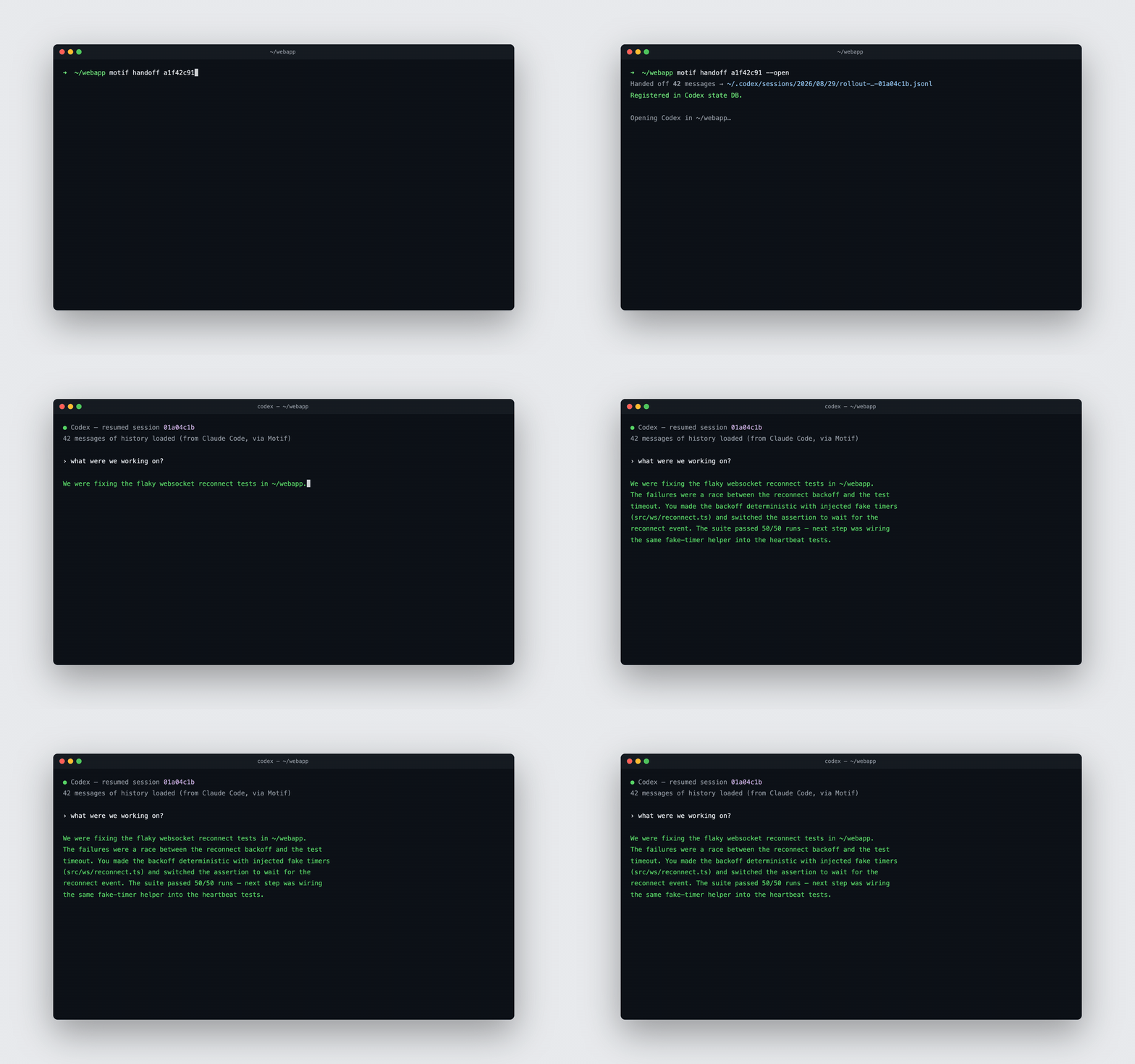
Start in Claude Code, finish in Codex — the session comes with you, natively.
Your team writes code with Claude Code, Codex, and Cursor — each tool keeps its sessions in its own format, in its own corner. Motif collects them in one place, makes them searchable across tools and teammates, streams them live to a team dashboard, and can hand a session started in one tool over to another tool **natively** — the target tool treats it as its own history, not a summary.
Features (v1)
- Collect — a lightweight daemon watches Claude Code, Codex, and Cursor
sessions on each dev machine and syncs them live to your self-hosted server.
Sessions never leave your infrastructure. (Other open-source agent CLIs are on
the roadmap; open-weight models themselves — Hermes, Qwen, Llama via Ollama/OpenRouter — already work today
as the memory engine through the
openai-compatibleprovider.) - Native handoff — convert a Claude Code session into a real Codex rollout file.
codex resumepicks it up as its own session; continue exactly where you left off. - Recall — an MCP server that hands your agents the 1-2k tokens that matter instead of letting them re-derive the codebase every session. Deterministic (FTS + session graph + human notes), so it needs no API key.
- Ask a session — resume any past Claude Code or Codex session read-only on the machine that owns it and get an answer from the agent that lived it, not a summary.
- Session memory — the server distills sessions into entity-based notes (files, decisions, topics) with supersession and conflict detection, powered by a pluggable LLM provider (Anthropic, OpenAI, any OpenAI
Related Skills

Elepha
Local session memory for Claude Code and Codex. Search your past AI coding sessions and recall them inside the


Expert Dispatch
new Specialist Dispatch Pattern -- let cheap AI assistants delegate complex tasks to Claude Code CLI. Bash ada


Solvoke Synap
The Missing Memory Layer for your AI Copilots. Collect, search, and organize chats from ChatGPT, Claude, Copil

Agents Can Communicate
Let your AI coding sessions talk to each other. Coordinate parallel work, exchange reviews, and hand off unfin

Chat Recall
One memory across every AI coding tool. Indexes Claude Code, Gemini CLI, Codex, OpenCode and Antigravity sessi


Scrollback
Recall past AI conversations across coding agents — Claude Code, Codex, Devin, OpenCode, Qwen, Gemini, Kimi, F

Related Agents

Cursor Delegate
Proactively use when this coding agent should hand a substantial coding, diagnosis, or implementation task to

Envoy Runner
Proactively use when Claude Code is stuck, wants a second implementation or diagnosis pass, needs a deeper roo

Recall
Runs the recall CLI over the user's past Claude Code sessions and returns the one actionable item — a command,
