
Langgraph Long Memory
Description
A detail Implementation of handling long-term memory in Agentic AI
Installation
This entry records only its repository, not the path inside it, so there is no
exact command to give. Open the source below and copy the folder into
~/.claude/skills/, or the file into ~/.claude/agents/.
README
Implementing Long Term Memory in Agentic AI
This blog is created on top of [langgraph guide](https://langchain-ai.github.io/langgraph/tutorials/rag/langgraph_agentic_rag/).
An **agentic or RAG-based solution** typically relies on a **two-layer memory system** that allows an agent or LLM to both stay focused on the **current context** and **retain past experiences**.
- Short-term memory manages immediate information within an active session or conversation.
- Long-term memory stores and retrieves knowledge across sessions, enabling continuity and learning over time.
Together, these layers make the agent appear more coherent, context-aware, and intelligent. Let’s visualize where the **memory component** fits within a modern **AI architecture**
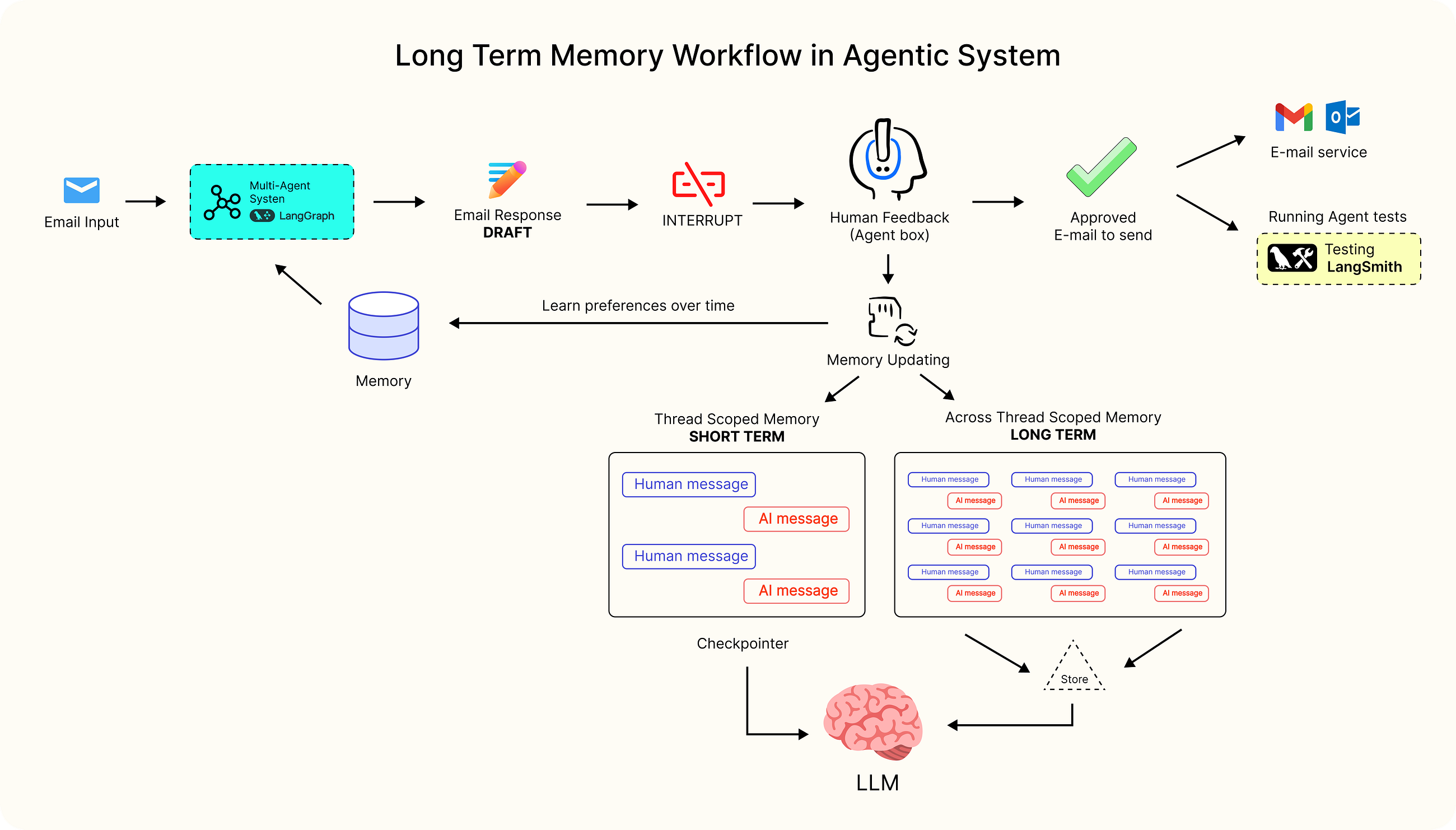 *Memory System in Agentic Architecture (Created by Fareed Khan)*
Let’s understand both of these memory layers:
1. Thread-Level Memory (Short-Term)
This memory works inside one conversation thread. It keeps track of what has already happened messages, uploaded files, retrieved documents, and anything else the agent interacts with during that session.
You can think of it as the agent **“working memory”**. It helps the agent understand context and continue a discussion naturally without losing track of earlier steps. [LangGraph](https://medium.com/r/?url=https%3A%2F%2Fwww.langchain.com%2Flanggraph) manages this memory automatically, saving progress through checkpoints. Once the conversation ends, this short-term memory is cleared, and the next session starts fresh.
2. Cross-Thread Memory (Long-Term)
The second type of memory is designed to last more than a single chat. This long-term memory stores information that the agent might need to remember across multiple sessions like user preferences, earlier decisions, or important facts learned along the way.
[LangGraph](https
Related Skills
Agency Agents
A complete AI agency at your fingertips - From frontend wizards to Reddit community ninjas, from whimsy inject

Firecrawl
🔥 The API to search, scrape, and interact with the web for AI

Artifacts Builder
Suite of tools for creating elaborate, multi-component claude.ai HTML artifacts using modern frontend web tech

CrewAI
Framework for orchestrating role-playing, autonomous AI agents. By fostering collaborative intelligence, CrewA

TrendRadar
⭐AI-driven public opinion & trend monitor with multi-platform aggregation, RSS, and smart alerts.🎯 告别信息过载,你的

mem0
| Universal memory layer for AI Agents | 51341 | 221 | 1 |
