

Kherep — DevOps skill for Claude Code
Orchestration layer for Claude Code and Codex: shared rules, hooks, skills and agents, model and tool routing, local inference, a Confluence knowledge base and a Cloudflare control plane for multi-nod.
How to install Kherep
This entry records only its repository, not the path inside it, so there is no
exact command to give. Open cfaysal/kherep and copy the folder into
~/.claude/skills/, or the file into ~/.claude/agents/.
What Kherep does
Orchestration layer for Claude Code and Codex: shared rules, hooks, skills and agents, model and tool routing, local inference, a Confluence knowledge base and a Cloudflare control plane for multi-node agent sessions.
Alternatives in DevOps
- Datachain — The Context Layer for unstructured data: typed, versioned datasets over S3, GCS, Azure 2.8k ★
- Context Infrastructure — A context and memory system for AI coding agents 774 ★
- Second Brain Cloudflare — One memory layer, every AI tool 734 ★
README

Kherep
Kherep coordinates coding agents, tools and shared knowledge across Claude Code and Codex. You direct the work; a Maestro plans the task, assigns bounded work and checks the result against code, tests and the requested outcome.
Use Kherep to give your agents consistent working rules, reusable skills and a shared approach to choosing models and tools. Runtime adapters keep Claude and Codex configuration separate while applying the same orchestration principles.
[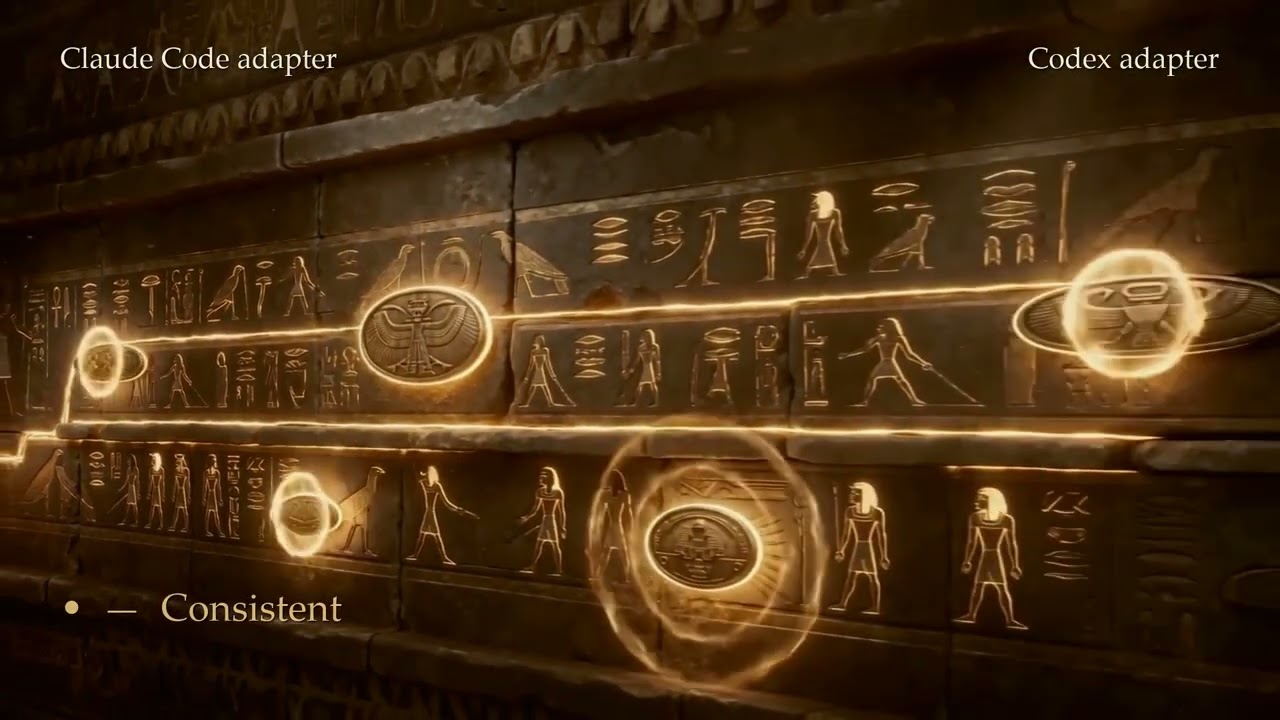](https://youtu.be/w9pLDRU_ulo)
*Watch the overview: [Kherep - Your runtimes, Your rules](https://youtu.be/w9pLDRU_ulo)*
Contents
- Key capabilities
- Architecture
- Supported integrations
- Installation
- Configuration
- Security model
- Documentation
- Development
- Contributing
- Roadmap
- License
Key capabilities
- Maestro agent orchestration: plan work, delegate focused tasks and verify the combined result.
- Claude Code and Codex adapters: shared rules with installation and hooks for each runtime.
- Rules, hooks and skills: reusable workflows for implementation, review, debugging and delivery.
- Model and tool routing: choose available capabilities through operator-configured policies.
- MCP integration: connect explicitly configured services through transport and authentication adapters.
- Local inference: use configured local processing routes, including a separate path for private inputs.
- Central Brain: a shared knowledge base in a dedi
Related Skills
Moto
Floom's terminal IDE for AI agents: Claude control plane, Codex workers, Docker runtime, hooks, skills, memory


Samzong
Inference Serving Stack: Scheduling and routing across heterogeneous models — the production path for vLLM and

Forgd Verdict
Data loss prevention for Claude: finds secrets and personal data in prompts and responses, blocks prompts thro


Bot Toolkit
Reusable TypeScript core for building unattended Claude-powered chat agents: session storage, per-room workspa


Loan Policy Assistant
Student loan policy assistant on Amazon Bedrock: Knowledge Base on S3 Vectors, Guardrails on input and output


Ijfw
IJFW — It Just Fcking Works. Ferrox Labs' local-first infrastructure for AI coding agents: shared memory, smar

Related Agents
Paperclip Reviewer
Paperclip 2026.529+ governance-first integration platform code review specialist — control plane + adapters tw


Sync Secretary
Grounded secretary for Sync. Use for source-cited questions about Claude and Codex council orchestration: task


Hcs Hook Integrator
Wires Claude Code + Codex hooks to the HCS substrate without embedding policy in hook bodies. Maintains .claud
